The study presents the results of a survey of the people in 27 countries, conducted by Ipsos, on current topics and the level of approval of the development prospects of countries.
Analysts of the Roscongress Foundation have identified the main theses of this study, accompanying each of them with a relevant piece of video broadcasts of panel discussions held as part of the business programs of key events held by the Foundation.
Coronavirus is no longer the main topic that worries people in the world while inflation has become the new leader.
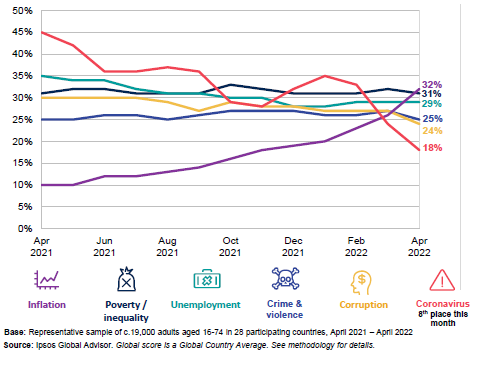
The results of a survey of people in 27 countries around the world (North and South America, Europe, Asia, the Middle East, South Africa, Australia) show that after a long period of dominance of epidemiological fears in the mood of the population, coronavirus infection has lost its leading place in the ranking of topics of concern to people. Over the year, the share of respondents indicating the coronavirus in the top three most exciting topics decreased from 45% (1st place) to 18% (8th place). Over the same period, concerns about inflation more than tripled (from 10% to 32%).
Only a third of those surveyed believe their countries are moving in the right direction.
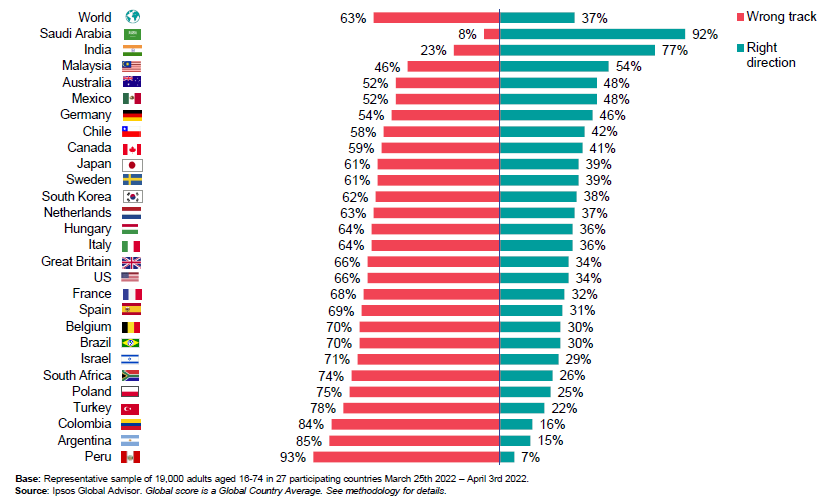
Assessing the general direction of development of their countries, 63% of respondents indicated that their countries are moving in the wrong direction. Only in three countries the share of positive assessments of the direction of the countrys development exceeded the share of negative ones: Saudi Arabia 92%, India 77%, Malaysia 54%. The lowest level of support for the countrys development direction is observed in Latin American countries: Colombia 16%, Argentina 15%, Peru 7%.
General assessments of the development of countries by the population correlate well with their assessments of the economic situation.
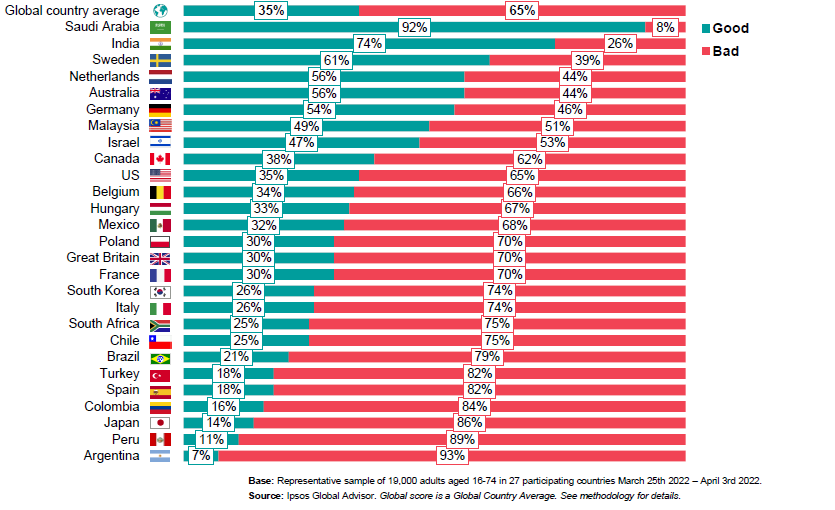
Across all countries, 35% on average say that the current economic situation in their country is good, while a majority (65%) say that it is bad. Saudi Arabia remains at the top of the rankings, with 92% describing the countrys economic situation as good. The countrys score has not dropped below 80% since March 2018. Swedens score has recovered from last months drop, increasing 16 points up to 61%. There is also an 11-point rise in Malaysia (49%), Israel (47%) and Chile (25%). After big increases last month in Japan and South Korea, scores in both countries have returned to their previous levels, down 12 points in Japan (14%) and 11 points in South Korea (26%). Elsewhere, the largest decreases are in Spain (-16 to 18%) and Great Britain (-11 to 30%).
We also invite you to familiarize yourself with other materials posted in special sections of the Roscongress Information and Analytical System Economic progress, COVID-19 and Monetary Policy dedicated to current topical issues.