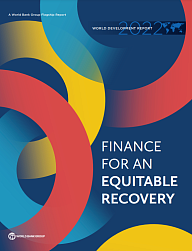
This report by the World Bank examines the effects of the crisis caused by the pandemic and studies the central role of finance in a robust and equitable economic recovery.
The Roscongress Foundation presents the salient points of the publication accompanied by fragments of broadcasts of relevant panel discussions from the business programme of international events held by the Roscongress Foundation.
The coronavirus pandemic revealed existing economic and financial difficulties and caused new problems which continue to impact economies.
The COVID-19 pandemic triggered a major global economic crisis, with especially severe impacts for emerging economies. Governments responded with large economic programs that were successful in the short run. However, they exacerbated a number of pre-existing fragilities that will need to be actively managed to promote an equitable recovery. Economic vulnerabilities in one sector of the economy can affect others through multiple, mutually reinforcing channels that connect the financial health of households, firms, financial institutions, and governments. Yet, as the authors of the publication point out, sector interconnections can also benefit the broader economy if swift and effective policy action is used to manage economic risks that have arisen during the pandemic.
At the moment, there are four pressing economic challenges related to finance, loans, and debt.
The report highlights four pressing financial risks that need to be addressed to support a robust and equitable economic recovery. The risks are: rising nonperforming loans, delayed resolution of distressed loans, tighter access to credit, and elevated levels of sovereign debt. For each of the problems, the authors of the report propose concrete steps that policymakers can take. Concerning nonperforming loans, the World Bank experts point out that increasing transparency and reducing the share of nonperforming loans enables financial institutions to remain stable, well-capitalized, and able to provide credit, especially to low-income households and small businesses. Effective insolvency procedures, including out-of-court options, can reduce the social costs of widespread debt distress, prevent the misallocation of resources, and limit government interference in debt resolution. Innovations in digital finance and lending models can help financial institutions reliably assess and manage risk and continue to provide credit, especially to low-income borrowers. Concerning elevated levels of sovereign debt, the authors of the report note that proactive management and reduction of sovereign debt can free up fiscal resources needed to support the recovery. The experts emphasize that delays in addressing debt sustainability are associated with protracted recessions, rising inflation, and reduced spending on social safety nets, public health, and education, which have disproportionate impacts on the poor.
Video: https://roscongress.org/sessions/novaya-model-ekonomicheskogo-razvitiya-v-mire/search/#00:55:57.000
Gain more insights about economic development, trade, finance, and possible ways to stabilize the economy during the pandemic and afterwards in the Trade policy, Economic progress, StayHomeEconomy, and Financial market sections of the Roscongress Information and Analytical System.