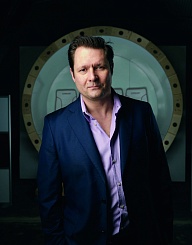
Dirk Ahlborn, CEO of Hyperloop Transportation Technologies, shares the latest news on plans to create an alternative to air transport.
What scientific discoveries, technologies, and materials are required to build the Hyperloop?
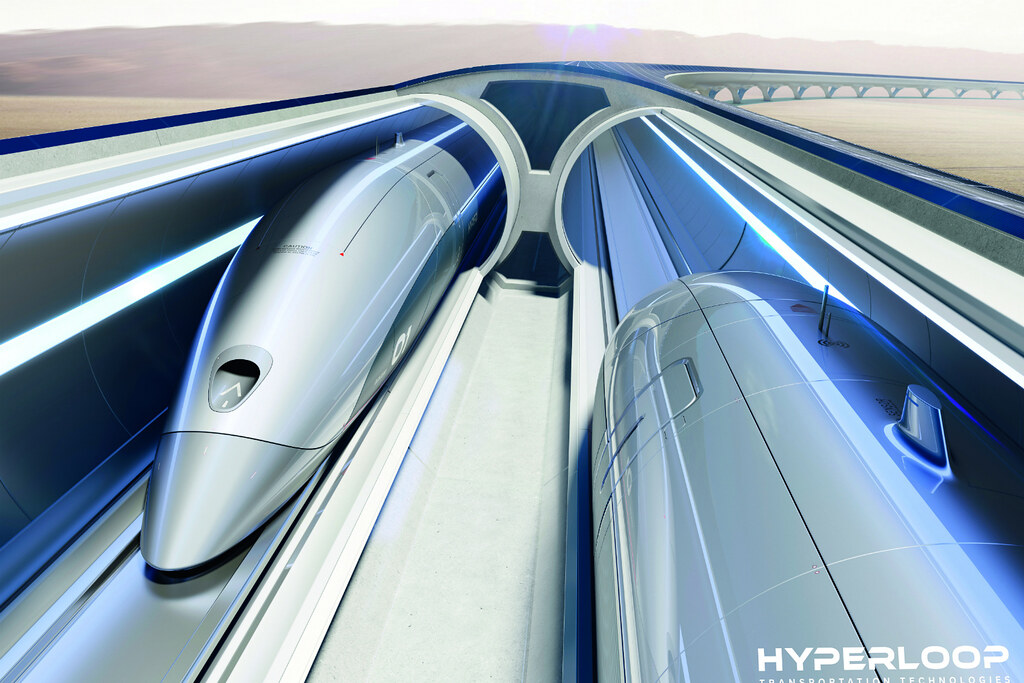
Most of the technical solutions needed to make our project possible already exist and are operating in numerous devices. Advancements in the last decades in vacuum, battery, and solar technology allow us to build a unique transportation system that makes economic sense today. We at Hyperloop understand very well that for every issue, there are several solutions. Our aim is to choose the best solutions and bring them together in one product.
What options for laying down railway tracks will be available to countries that want to implement the project?
The requirements for Hyperloop are similar to those of high-speed rail projects. For example, you can build trenches or underground tunnels. But there is another, more efficient option: mounting tracks on pylons. This allows the system to use solar and wind energy, which cuts the costs of maintaining the equipment and allows us to reduce ticket prices. This approach is also very environmentally friendly. The Hyperloop can be built close to existing transport routes, for example, along an existing motorway or railway line.
How soon will your project pay off, and how affordable will vacuum train tickets be?
All of our feasibility studies so far show that our Hyperloop system has an ROI of 812 years. That figure is not precise because the final design specifications will depend on where the tubes are laid and on other factors linked to the location of construction work. When we were in the planning stages, we initially put price restrictions on tickets, at a level that was in line with existing transport tariffs (for example, bus tickets). As a result, we are creating a project that will offer good profitability with relatively affordable ticket prices. And, importantly, this will happen without any subsidies, which governments use to support many transport systems that are less than fully effective.
How do you intend to combine freight and passenger traffic in this project? To what extent is this solution economically justified?
Freight is an important part of our business model. However, you need to think about people first. Human safety is the most important aspect and needs to be considered from the very beginning. Freight can be sent using Hyperloop technology in between passenger capsules or at night.
How dangerous will it be to use the Hyperloop, considering the high speed of travel and the vacuum in the tubes? Will the passenger capsule be reliable enough for travel under these conditions?
Hyperloop is approximately 10 times safer than flying, since it has 10 times fewer failure points than an aircraft. Munich Re, one of the worlds largest reinsurers, has already declared our system not only feasible, but insurable. So, aside from the obvious reasons, passenger safety is also important for us because otherwise the system will not be able to meet the insurance and regulatory requirements established by law.
In order to warn us of possible accidents, we have, for example, developed a new super-durable composite material, Vibranium. This can independently send signals to technical staff about any problems that may arise in the train. Using a smart composite will give us the opportunity to eliminate possible defects at the earliest stages, which should protect passengers from danger very effectively.
Are Russian companies and experts capable of creating a Hyperloop system in Russia, in your view?
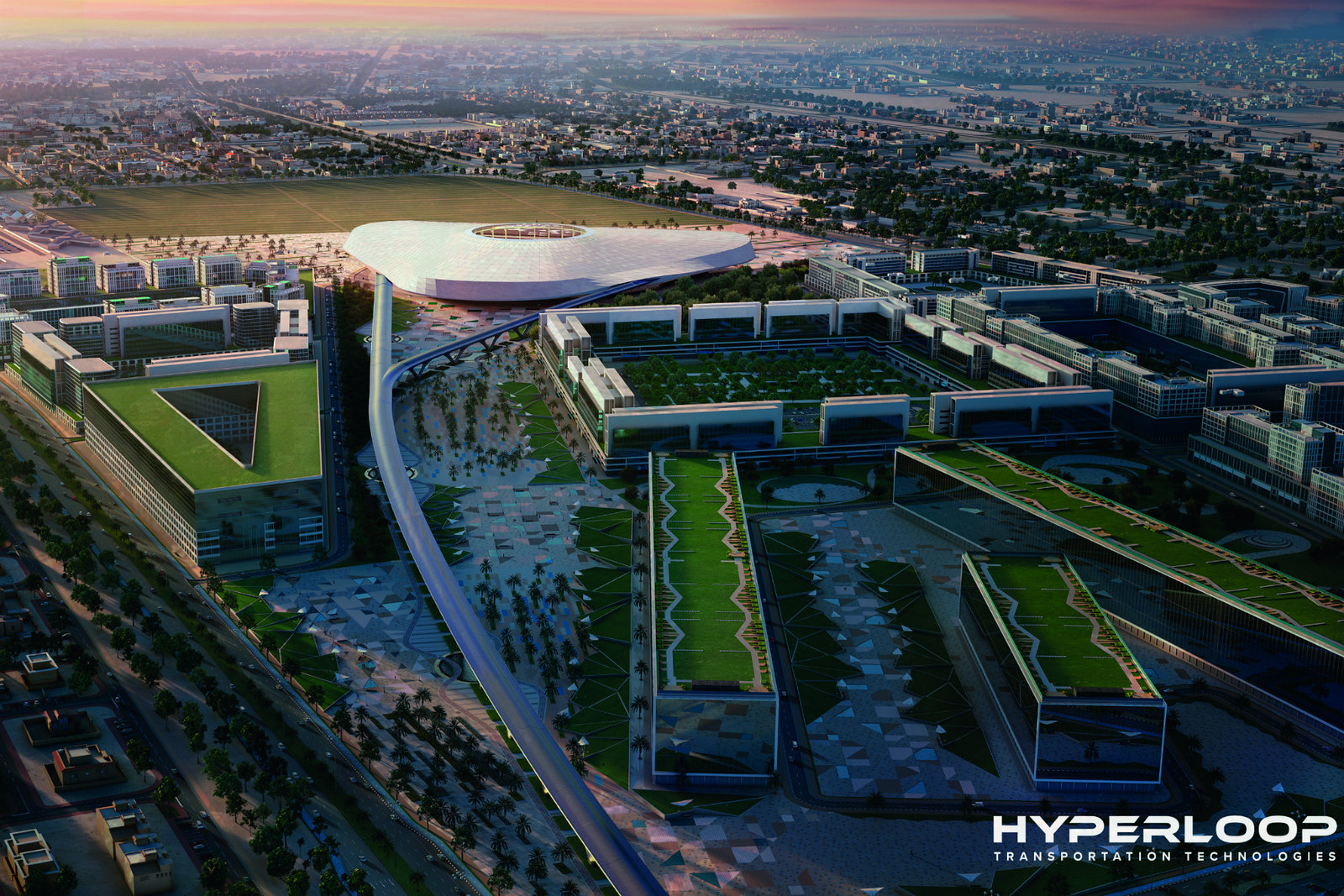
Absolutely! We have already studied the possibility of building a Hyperloop in Russia. And we have a number of talented Russian engineers currently working in our team. We are very satisfied with their skill sets and we would like to work with Russian experts more closely in future.
How will these trains develop? What is the outlook for them in Russia?
The key problem for modern railway and underground systems is that they cannot make a significant profit for their owners. They rely entirely on government subsidies. But we should be using tax money to provide more important things for society, like education or healthcare, for example. Transport issues, in our opinion, should be addressed through the kind of innovative projects that ensure highspeed travel and good profitability, and an excellent level of passenger safety. Many politicians in different countries already understand all the strengths of this approach. We look forward to working with the Russian authorities to build a Hyperloop in your country.

Source: SPIEF-2018 Official Magazine