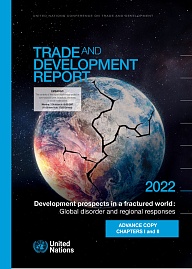
The flagship report of UNCTAD analyzes the main trends and risks of the global economy in 2022.
Analysts of the Roscongress Foundation have identified the main theses of this study, accompanying each of them with a relevant piece of video broadcasts of panel discussions held as part of the business programs of key events held by the Foundation.
Monetary and fiscal policy moves in advanced economies risk pushing the world towards global recession and prolonged stagnation, inflicting worse damage than the financial crisis in 2008 and the COVID-19 shock in 2020.
According to the report, rapid interest rate increases and fiscal tightening in advanced economies combined with the cascading crises resulting from the COVID pandemic and the cituation in Ukraine have already turned a global slowdown into a downturn with the desired soft landing looking unlikely.
In a decade of ultra-low interest rates, central banks consistently fell short of inflation targets and failed to generate healthier economic growth. Any belief that they will be able to bring down prices by relying on higher interest rates without generating a recession is, the report suggests, an imprudent gamble.
At a time of falling real wages, fiscal tightening, financial turbulence and insufficient multilateral support and coordination, excessive monetary tightening could usher in a period of stagnation and economic instability for many developing countries and some developed ones.
This year’s interest rate hikes in the United States are set to cut an estimated $360 billions of future income for developing countries (excluding China) and signal even more trouble ahead, the report warns.
A synchronized slowdown in the global economy affecting all regions.
UNCTAD expects the world economy to grow 2.5% in 2022. Prospects are worsening, with growth in 2023 expected to decelerate further to 2.2%, leaving real GDP still below its pre-pandemic trend by the end of next year and a cumulative shortfall of more than $17 trillion — close to 20% of the world’s income.
The synchronised slowdown is hitting all regions but is ringing alarm bells for developing countries, where the average growth rate is projected to drop below 3%, a pace insufficient for sustainable development, further squeezing public and private finances and damaging employment prospects.
Middle-income countries in Latin America, as well as low-income countries in Africa, will register some of the sharpest slowdowns this year. The report notes that countries that were showing signs of debt distress before Covid are taking some of the biggest hits (Zambia, Suriname, Sri Lanka) with climate shocks further threatening economic stability (Pakistan).
Levels of debt distress and underinvestment are dangerous.
Net capital flows to developing countries have turned negative with the deterioration of financial conditions since the last quarter of 2021, the report says. On net, developing countries are now financing developed ones. Some 90 developing countries have seen their currencies weaken against the dollar this year — over a third of them by more than 10%; foreign exchange reserves are falling, and bond spreads are widening, with a growing number posting yields 10 percentage points higher than US treasuries. Currently, 46 developing countries are severely exposed to multiple economic shocks and another 48 seriously exposed, heightening the threat of a global debt crisis.
The report concludes the situation in developing countries is much more tenuous than recognized by the G20 and other international financial fora, with talk of a global financial safety net increasingly at odds with their reality. Developing countries have already spent an estimated $379 billions of reserves to defend their currencies this year, almost double the amount of new Special Drawing Rights (SDRs) recently allocated to them by the International Monetary Fund and have also suffered significant impact from capital flight.
We also invite you to familiarize yourself with other materials posted in special sections of the Roscongress Information and Analytical System Economic progress, Supply chain management and Monetary policydedicated to the state of the world economy.