How to do business in Russia if youre not a man
Today, more and more women are successfully opening businesses in the Russian economy simply because they are interested in becoming entrepreneurs. The Eurasian Womens Forum will be held on 1921 September in St. Petersburg. In the meantime, we decided to investigate the progress women have achieved in business on the basis of several success stories.
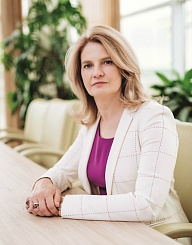
As a child, Natalya Kaspersky dreamed of becoming a vet, but after high school she enrolled in... the Faculty of Applied Mathematics at the Moscow Institute of Electronics and Mathematics. After she graduated, she chose a job at a design firm near her home, but she found the work to be boring. In 1994, she got a job at the computer shop attached to KAMI.
Her husband, Eugene Kaspersky, worked at the same company. His office was on the second floor of the building, where he wrote software. Natalya sold computer accessories and software on the ground floor. The stores product range included Kaspersky Antivirus AntiViral Toolkit Pro. As Natalya explains, «it wasnt routinely promoted and it didnt sell.» It turned out that the software did not even have the required licence from the software registration agency. Natalya registered the appropriate licence and began to actively promote the antivirus software on the market. In just two years, sales increased to USD 600,000.
As Natalya explains, «I had no ambitions to become CEO.» But her husband refused the management position, and they could not find anyone else to hire for the position.
 Natalya was responsible for scheduling work with distributors at the new business. She continues: «Paradoxically, the fact that Im not a great salesperson helped us.» Rather than selling the product herself, she tried to find people on the market who knew how to do it better. She did this without realizing that this is exactly how you build out a distribution network. The strategy worked. In 2007, the companys turnover exceeded USD 200 million. By this time, Kaspersky Lab had managed to break into international markets. In the US, it was the sixth best-selling antivirus software product, and in Germany and Austria it led the market.
In 1999, the Kasperskys divorced, but Natalya continued as the companys CEO until 2007. Over time, disagreements over how to develop their shared business emerged, so they decided to divide it: Natalya received Kaspersky Lab subsidiary InfoWatch, among other assets. InfoWatch specialized in the development of software to protect against information leaks.
InfoWatch was founded in 2003, and it was well ahead of its time. As Natalya relates: «The business grew slowly and was deeply unprofitable. When I took over this company in 2007, the situation was worse than I thought. We needed to generate demand on our own in order to put the business back on its feet. We began to collect information on data leaks that were publicized in the media. Gradually, potential clients began to show interest in this market niche.»
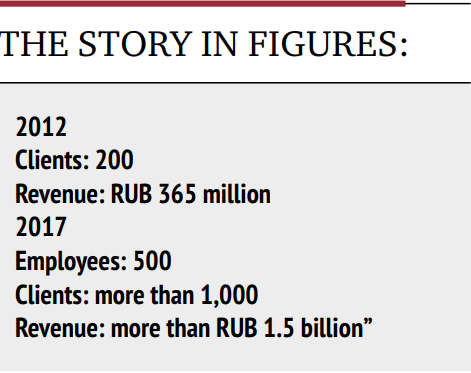
In 2012, the company became profitable for the first time ever, and it began to grow by 6070% per year. In 2016, sales exceeded RUB 1.5 billion. The Russian data loss prevention market is still small: Natalya estimates that it is no more than RUB 10 billion. At the same time, half of the market is currently controlled by InfoWatch.
The companys clients include state agencies, large banks (Sberbank and Alfa-Bank), oil companies (Gazprom VNIIGAZ and Transneft), and telecommunications operators (Beeline and MegaFon). InfoWatch started entering foreign markets in 2009. Since geopolitics is complicating the situation in the West, the company decided to turn east.
Now, its clients include banks in Bahrain and Kuwait Finance House. In May 2017, Natalya opened an office in Dubai, and another followed in Kuala Lumpur in September.
In 2017, ForbesWoman named Kaspersky one of the richest women in Russia with a fortune of USD 270 million. However, she herself is sceptical about such rankings. She considers money to be primarily a resource that can be invested in business. In 2012, she acquired a 16.8% stake in the German antivirus software developer G Data Software, and a controlling stake in the German company EgoSecure, which develops software to protect corporate information. In February 2018, InfoWatch bought an 80% stake in the HandyBank payment system. At the same time, she admits: «The more businesses I have, the more I realize how little I understand.»
Text: Yulia DUDKINA, Laboratoriya Odnazhdy, especially for the EEF magazine