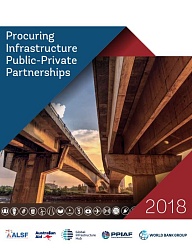
According to experts from the International Bank for Reconstruction and Development (The World Bank Group), the relevance of public-private partnerships (PPPs) for infrastructure projects is supported by the fact that over 70% of countries (on average in a given region) have a constantly updated regulatory and institutional framework for PPPs. This report provides a comparative analysis of 135 economies in 7 regions with questions pertaining to PPPs. The report is organized according to the three main stages of the PPP project cycle: preparation, procurement, and contract management of PPPs. It also examines a fourth area: the management of unsolicited proposals (USPs).
The publication reveals that there is significant room for improvement in the PPP regulatory framework of most of the countries assessed. Also, research shows that performance varies greatly by region, depending on the income level of the countries: the higher the income level of the group, the higher the performance in the assessed areas. Preparation and contract management are the weakest performing areas across all income level groups and they are also the weakest areas with respect to adopting good transparency practices.
.png)
Transparency throughout the PPP project cycle ensures that the project delivers the expected socio-economic outcomes and that the expected efficiency gains are achieved. Publication of project documents leads to a greater predictability of the project quality, reduces risks of corruption and fraud, builds public trust in PPP projects, and helps balance the interests of private investors and the society. Transparency can be achieved by disclosing information to the public on all stages of the investment program.
.png)
Most economies adhere to international good practices in terms of disclosure of information to the public in the procurement phase, but do not adopt such disclosure practices during the preparation phase and contract management. Only 60 percent of the economies surveyed publish PPP tender documents and as few as 13 percent allow public access to the system for tracking progress and completion of construction works. Based on the results of their research, the authors emphasize the necessity for improving transparency of PPP projects both in individual regions and globally.
This publication has been posted in the Roscongress Information and Analytical System on the recommendation of the Roscongress Foundation expert community.