Invest in Russia — invest in Russian regions!
All analytics

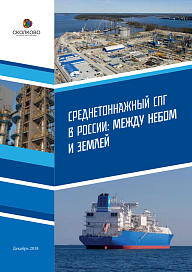
Medium-Tonnage LNG in Russia: Up in the Air

Research
5 April 2019

The number of countries that use liquefied natural gas (LNG) in one form or another to support their economic growth and ensure energy security is rapidly growing. In some cases, LNG projects become more competitive than traditional pipeline solutions. The analysts of the Moscow School of Management SKOLKOVO state in their report that, compared to large- or small-tonnage projects, medium-tonnage projects have the following competitive advantages: lower capital expenditures, shorter construction periods, relatively low natural gas requirements, possibility of building a series of identical lines on one location, and a fairly wide range of medium-tonnage technologies. Medium-tonnage LNG projects provide flexibility, helping to adapt to changes in market demand without creating excess capacities. With a relatively fast return on investment and a high internal rate of return (IRR), medium-tonnage projects seem to be the most appropriate to the current market realities.

Russia’s huge advantage is its geographical position in relation to the EU and China — the world’s largest consumers of energy resources. At the same time, low competition among contractors for building LNG facilities, the necessity for importing main process equipment, lack of experience with implementing medium-tonnage LNG projects, and high interest rates for attracted investments usually result in substantial capital costs per capacity unit for Russian medium-tonnage projects — both for the liquefaction cycle itself and for building the required infrastructure like seaport facilities, pipelines, roads, and power lines. Nevertheless, owing to a low cost of the natural gas itself, aggregate short-term marginal costs for medium-tonnage LNG projects in Russia remain among the lowest globally. In 2019, as many as three medium-tonnage LNG production facilities are to be commissioned in Russia. Of these, two are located on the Baltic sea and the third one is an expansion of the Yamal LNG large-tonnage project.

In order not to miss the window of opportunity for developing LNG projects, Russia is creating a predictable and transparent environment for doing business in this sector. In December 2018, the Government of the Russian Federation made an important and much-anticipated move: it allowed to sell LNG and regasified LNG to some categories of consumers at a price that is higher than the rates established by the Federal Anti-Monopoly Service. In addition to that, for a successful development of medium-tonnage LNG production in Russia the sector requires state support in the following areas: developing special statutory regulation conditions for medium-tonnage projects, which will help reduce capital costs and construction periods; simplifying the procedure for connecting to gas pipelines; supporting non-discriminatory access to LNG terminals and infrastructure units, including LNG production capacities; abolishing monopoly for LNG exports, which will open new markets and access to foreign capital, etc.

The research done by the authors of the report demonstrates that implementing these measures will bring extra investment of over 300 billion rubles before 2023, while medium-tonnage production capacities can be expected to increase by 5 million tons, of which around 1 million tons can be supplied to the domestic market and 4 million tons can be exported.
Anlytics on the topic

All analytics
Research
13 February 2019
Investments in the Fuel and Energy Sector: Growth after a Crisis in the Oil Market

This issue (No. 61, June 2018) of the monthly energy bulletin published by the Analytical Center for the Government of the Russian Federation is focused on recent changes in investment environment in the fuel and energy sector in Russia and globally.


Expert opinion
26 November 2021
How To Attract and Retain Human Resources in the Arctic Regions

Summary session «Personnel for the Social Sphere in the Arctic» within the framework of the Arctic Talent Acquisition Conference, which took place on November 15-16, 2021 in Arkhangelsk.

Research
26 March 2021
World Energy Trilemma Index 2020

Since 2010, the World Energy Trilemma Index has provided an independent and objective rating of a country’s energy policy and performance using verified global and country-specific data to assess management of three core dimensions: Energy Security, Energy Equity and Environmental Sustainability.

Articles
31 October 2019
Current Perspectives for the Formation of International Energy Markets

The current perspectives for the formation of international energy markets are mainly due to the policy of decarbonization of world energy and the growth of energy consumption. Each country forms its energy policy based on its own fuel and energy potential and the situation on international energy markets. The global oil market is currently largely dependent on global processes with a high degree of ‘uncertainty" associated with the use of protectionist and political methods of struggle in the global world economy. «Trade wars», and sanctions increase the uncertainty of the market for the «global» energy resource — oil. The global market for «alternative» energy and technology in this area is much more defined and predictable. The introduction of «platform» economy methods in the energy sector, in combination with the macroregional form of organization of energy markets, will reduce uncertainty factors by avoiding protectionist methods, including sanctions methods, leaving them behind the «perimeter» of macroregional borders.