Invest in Russia — invest in Russian regions!
All analytics

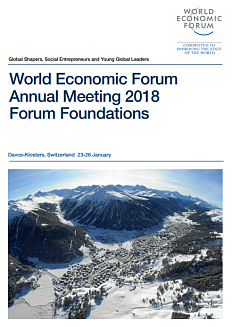
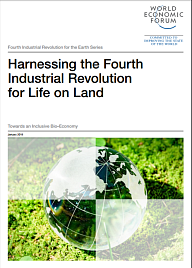
Harnessing the Fourth Industrial Revolution for Life on Land

Research
23 January 2018

Technological development in our days has reached unprecedented scale and speed. Just one of today’s standard tablet devices possesses the equivalent processing power of over 5,000 desktop computers from the mid-1980s. Storing 1GB of data in 1997 would have cost more than $10,000 a year; today it costs approximately $0.03. Unprecedented progress has been made in other areas of science and technology. The World Economic Forum has termed this period and its consequences on society as the Fourth Industrial Revolution.

The economic activity of a man, which began to grow fast the mid-20th century, had a significant impact on the environment. Deforestation, air pollution, extinction of various animal species, as well as other negative processes still continue. Moreover, due to the sharp increase in the world population and growth of consuming capacity, the trends mentioned above only accelerated. For example, the loss of tree cover — in the area about the size of New Zealand — in 2016 was 51% higher than in 2015.

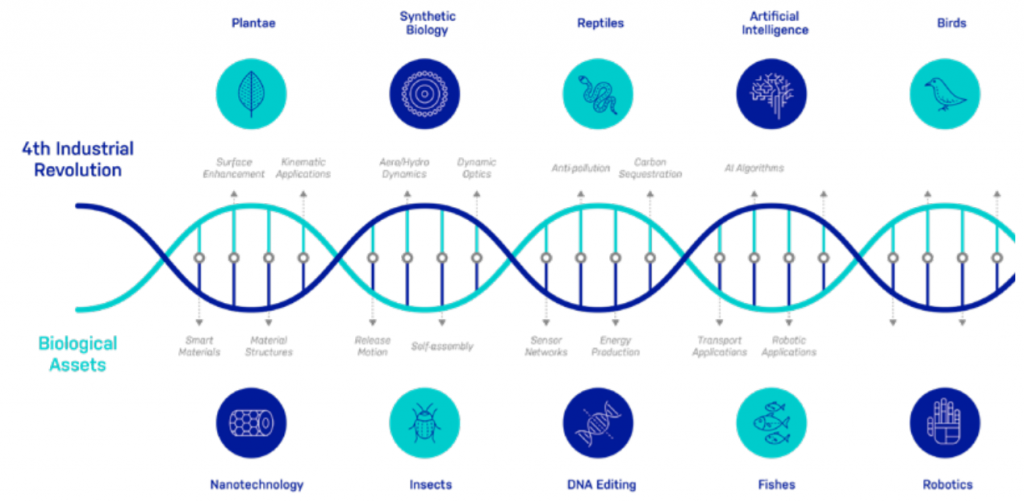
The Fourth Industrial Revolution is not only transforming social networks, scientific research and whole industries, it is also radically reshaping biological and material science innovations. There are technologies that can meet needs of the population, reducing, at the same time, the burden on the environment. As a result, new opportunities appear to solve environmental problems.

The main purpose of this Report is to demonstrate the potential of the Fourth Industrial Revolution and, thereby, to stimulate further development in this field in order to protect the environment.
Anlytics on the topic

All analytics
Research
24 September 2020
The future of Arctic security. The geopolitical pressure cooker and the consequences for the Netherlands

In their report, specialists of Clingendael Institute have analyzed the Arctic region in terms of interconnection between climate changes and geopolitical context of security and further development of the Arctic region.

Research
23 March 2018
ARCTIC 18-24-35

Russian Arctics is a special site for state management. Its complexity consists not only in climatic, ecological or logistical features, which undoubtedly have an impact on development, but also a very high price of human errors. When developing a strategy for the region, it is necessary to take into account a variety of natural, not just economic, factors.

Research
2 February 2018
In Focus: Corporate Governance and Sustainability

KPMG presents the 7th issue of the KPMG Bulletin: In Focus: Corporate Governance and Sustainability It focuses on the introduction of best available technologies and related changes in environmental legislation.

Research
5 April 2019
Problems and Prospects of the Northern Sea Route as an Element of the Single Arctic Transport System

This publication was prepared by the Analytical Department of the Executive Office of the Federation Council of the Russian Federation for the online conference Problems and Prospects of the Northern Sea Route as an Element of the Single Arctic Transport System which took place from September 1 to October 31, 2018.