Technological trends
Having analyzed the current market situation in the global construction and development sector, the authors of the report identified three main trends which are shaping the industry:
- accumulating set of technologies to transform the industry;
- increasing investment in construction technologies;
- growing understanding about practical application of the technologies.
Internet of Things
According to the authors of the report, the main driver of digitalization is the Internet of Things. The notion of IoT encompasses three related segments energy efficiency, automation, and connected homes. IoT is a basis for building positive customer experience, digital client services, and active engagement with end customers of housing property.
Shift of focus of customer and developer attention
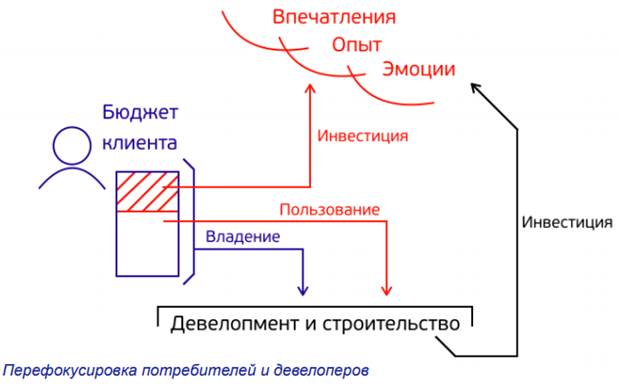
The authors of the report note that the focus of competition is shifting: rather than ensuring the highest product quality, businesses are now trying to provide positive customer experience. Thus, developers must consider the needs of all their customers those who invest in housing property with the aim of selling it or letting it out, and those who prefer renting a home to free money for getting new experiences.
Housing as a product
The needs of millennials coupled with cross-cutting industrial and user technologies lead the housing sector to the concept of housing as a product. On a subscription basis, a tenant may receive access to controlling smart devices in the home through a mobile application. Management companies and homeowners may use a unified control system to monitor risks of emergencies and remotely take readings from energy meters.
Application of technologies
According to the authors of the report, the segment of development proper remains the most heavily invested in and the most technologically rich group of processes. Thus, the first steps for construction and development companies to take in the near future might be the following:
- integration into the ConTech community (for example, by forging partnerships with startup accelerators or creating a joint accelerator for generation of concepts and prototyping);
- prioritizing two to three projects (such as digital customer experience, digital product, or digital construction site) to be implemented in the company.