Please note that all publications are provided for information purposes only and are not intended to be a substitute for professional medical advice, diagnosis, or treatment.
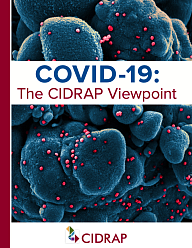
In this report, a working group from the Center for Infectious Disease Research and Policy (CIDRAP) details similarities and differences between pandemic influenza viruses and the severe acute respiratory syndrome coronavirus-2 (SARS-CoV-2, the virus that causes COVID-19) and conducts a comparative analysis of the epidemiology of the COVID-19 pandemic and past pandemics. Based on the results, the researchers outline three possible pandemic scenarios for COVID-19.
The Roscongress Foundation presents the salient points of the publication accompanied by fragments of broadcasts of relevant panel discussions from the business programme of international events held by the Roscongress Foundation.
Because of a longer incubation period, more asymptomatic spread, and absence of herd immunity, COVID-19 appears to spread more easily than flu.
When severe acute respiratory syndrome coronavirus-2 (SARS-CoV-2)—the virus that causes COVID-19—first emerged in Wuhan, China, in December 2019, even the most experienced international public health experts did not anticipate that it would rapidly spread to create the worst global public health crisis in over 100 years.
The virus caught the global community off guard, and its future course is still highly unpredictable. The authors of the report name pandemic influenza as the best comparative model for predicting what to expect with this pandemic. Since the early 1700s, at least eight global influenza pandemics have occurred. Even though coronaviruses are very different from influenza viruses, the COVID-19 pandemic and pandemic influenza share several important similarities.
Video: https://roscongress.org/sessions/budushchee-razuma-mitio-kaku/search/#01:29:48.800
According to CIDRAP, the length of the pandemic will likely be 18 to 24 months. The course of the pandemic could be influenced by a vaccine.
Key points from observing the epidemiology of past influenza pandemics that may provide insight into the COVID-19 pandemic include the following. First, the length of the pandemic will likely be 18 to 24 months, as herd immunity gradually develops in the human population. Experts are uncertain about how much time it will take to reach a critical threshold of herd immunity to halt the pandemic because infection rates vary substantially by geographic area.
Second, the course of the pandemic could be changed by a vaccine, but the authors of the report note that the course of past pandemics was not substantially influenced by a vaccination campaign, except for the 2009-10 pandemic when the vaccination program prevented 700,000 to 1,500,000 clinical cases, 4,000 to 10,000 hospitalizations, and 200 to 500 deaths in the United States.
Based on observations of the epidemiology of past influenza pandemics, experts envision three different scenarios for the course of the COVID-19 pandemic, with waves of different heights and in different intervals.
Based on past observations, experts envision three different scenarios for the future of the COVID-19 pandemic. Under the first scenario, the first wave of COVID-19 in spring 2020 is followed by a series of repetitive smaller waves that occur through the summer and then consistently over a 1- to 2-year period, gradually diminishing sometime in 2021.
Under the second scenario, the first wave of COVID-19 in spring 2020 is followed by a larger wave in the fall or winter of 2020 and one or more smaller subsequent waves in 2021.
Lastly, under the third scenario, the first wave of COVID-19 in spring 2020 is followed by a «slow burn» of ongoing transmission and case occurrence, but without a clear wave pattern.
For more information about healthcare development as a strategic goal for economic stability and national security, please see the COVID-19, Healthcare, Medicine, and Pandemics special sections of the Roscongress information and analytical system.