During the pandemic, people around the world experienced anxiety and uncertainty about the future. The perception of uncertainty depends on how society handles the fact that the future cannot be known in advance. Different cultures handle this differently.
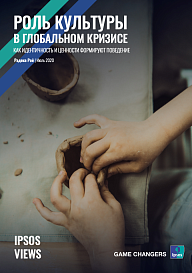
Ipsos experts present a study of the role of various cultural traditions in shaping the society behavior during the dangerous situation. The study also studies the impact of the pandemic on various aspects of consumer behavior.
Roscongress Foundation analysts highlighted the main theses of this research, accompanying each of them with suitable fragments of video broadcasts of panel discussions held as part of business programs of the key events hosted by the Foundation.
The crisis is the best time for cultural profiling. Studying the culture impact in times of crisis will help build a solid foundation for customer engagement. Refraction through a cultural lens also allows brands to learn from countries such as China, in terms different groups reaction, brand roles and what this can mean for brand communication and interaction around the world.
In some North Asian cultures, particularly in China and South Korea, freedom is more nuanced, suggesting that «reasonable» restrictions on personal freedom are acceptable, provided that a state provides protection from external interventions that threaten life and health. The authors of this study note that the government takes extraordinary powers and introduces rules that promise collective good, and then these rules are implemented with high precision. The key to the success of this approach is the problem solution and compliance with established procedures by citizens.
In Russia (unlike, for example, China, the UK and the USA), people have a great need for certainty of the future, so they expect more support from the government and brands to overcome the growing level of anxiety. At the same time, the reaction to isolation was calmer. The autonomy of the Russian person is inherent in his mentality, people are used to stock for long winters. Therefore, the crisis for many simply meant the need to increase stocks.
Experts still find it difficult to assess how much and how deeply the coronavirus has changed the world, but there is no doubt that the global pandemic has negatively affected the lives, livelihoods and health of consumers from different countries and cultures.
Consumption has not stopped, but its various aspects have changed under the influence of different contexts and needs:
• New consumption situations: people are limited by quarantine, strict isolation and the need to stay at home — forces that dictate new conditions for everything. This has particularly affected cooking and nutrition in general, wellbeing and health, hygiene and housework, entertainment and shopping.
• New emotional needs: Consumers now prioritize safety and the return of confidence, convenience, vigilance and proactivity, crisis response, empathy and support.
• Brand engagement has increased: people people look at brands more consciously. Brands are judged for their response to crisis, behavior, and the role they play, providing support and genuine empathy. This means that brand perception and evaluation can be based on new interpretations and revised according to new priorities.
Video: https://roscongress.org/sessions/podderzhka-promyshlennosti-novye-instrumenty/search/#01:07:27.935
Brand leaders are in the spotlight, as during the pandemic they are not only responsible for the main product, but also for society. Consumers evaluate brands and organizations based on their behavior in times of crisis. Wrong moves can lead to the destruction of relationships and loss of brand respect.
Marketers, like consumers, were unprepared for this crisis. Lack of understanding the role of culture and national nuances, for example, led to a world flooded with similar brand commercials about COVID-19.
Leading brands risk to be more criticized for how they use their advantages and how well their activities are in the best interests of the nation or consumers. Communication, behavior and engagement are paramount. This is also due to a work with customer feedback and employee behavior.
PR is one of the most delicate aspects of brand engagement — for example, ads that used COVID-19 to drive sales and showed insincere sympathy have frustrated many consumers.
See other materials, placed in special sections of the Information and Analytical System Roskongress StayHomeEconomy, COVID-19, modern consumer, level and quality of life and culture, on possible ways to stabilize the economy in the pandemic, as well as the development of a culture of different countries, including changes in consumer behavior.