The study by the Expert RA rating agency predicts that by the end of 2020, the decline in the Russian economy will amount to 3.8% of GDP, next year growth of 3.5% of GDP can be expected.
Roscongress Foundation analysts highlighted the main theses of this research, accompanying each of them with suitable fragments of video broadcasts of panel discussions held as part of business programs of the key events hosted by the Foundation.
In context of the global COVID-19 pandemic and a double blow to the Russian economy due to quarantine measures and a fall in oil prices, the correction of the economic course announced in January has turned into a radical simultaneous easing of both fiscal and monetary policies.
If the sharp increase in budget spending is largely temporary in nature, then greater emphasis on social policy and adaptation of the economy to low inflation will remain for a long time. At the end of the year, under the baseline scenario of the situation development, inflation of about 3% per year can be expected, the key rate and a decline in GDP about 4%, with a budget deficit and a drop in real household earnings of about 5%.
The quarantine measures caused the significant decline in economic activity by more than 20% and, as a consequence, a fall in GDP in April by about 2.5% of annual GDP. Expert RA believes that the main recession has already occurred in the second quarter of 2020, after which recovery growth began. Given the basic events development, by the end of the year the decline will amount to 3.8% of GDP, and next year growth of 3.5% of GDP can be expected also of a recovery nature. Full recovery will occur by the end of 2021.
Against the backdrop of a blow to consumer demand and corporate investment, as well as a decrease in net exports, the main resource for the economy will be budget spending, including emergency ones within the framework of economic support packages.
The main driver of economic growth in the crisis year will be a sharp increase in government spending, already increased by the results of the Presidents January message. Additional support packages, announced in April-May, envisage the allocation of about 3.8% of GDP to support the affected industries and direct payments to citizens. As quarantine measures come out, we should expect an increase in support and payments in the amount of 2.02.5% of GDP. In order to maintain the minimum level of the National Wealth Fund for 2021 and subsequent years against the background of lower budget revenues, such a program will require additional borrowing in the Federal Bond market in the amount of up to 2% of GDP financed, among other things, through long-term repos.
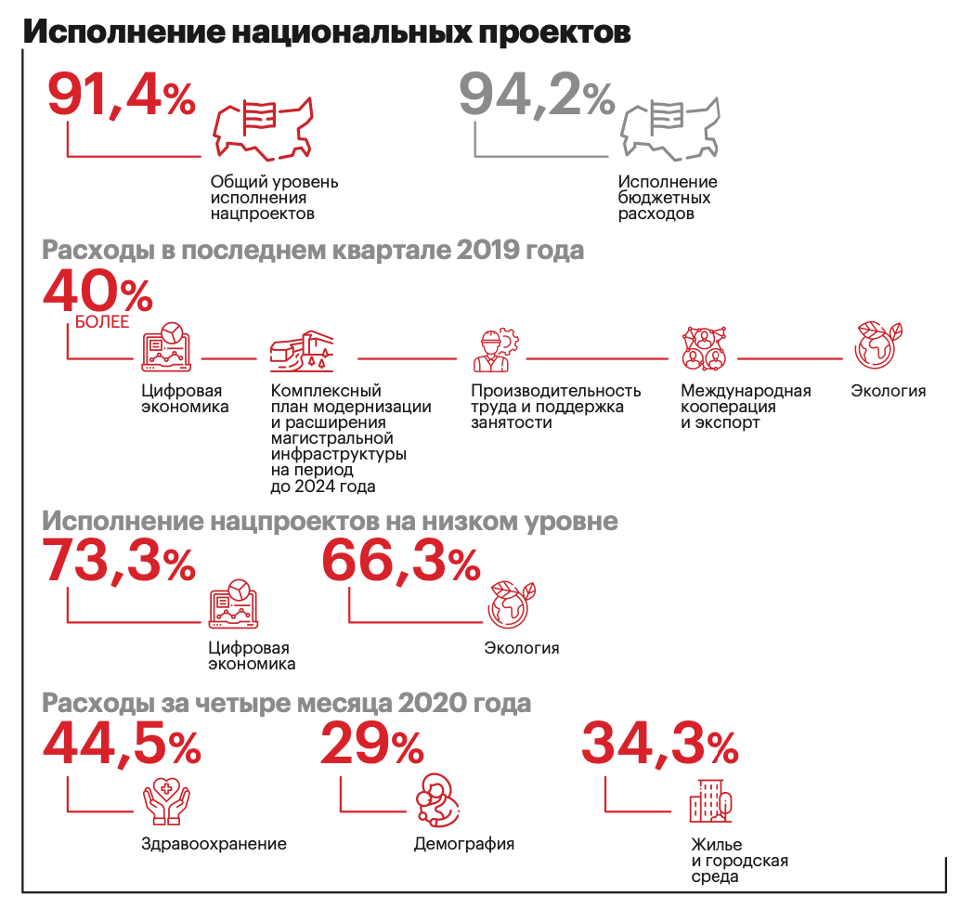
The National Economic Recovery Plan, released in early June, is not overly ambitious, but well balanced and in fact shall be implemented successfully. However, its scale is not sufficient to overcome the recession, and the implementation of national projects for various reasons is proceeding more slowly than it was planned.
Having managed to stop the attack on the ruble and the sharp rise in interest rates on the Federal Bond market and against the background of lower rates by global central banks, the Bank of Russia began to pursue a soft monetary policy.
The Bank of Russia in contrast to previous crises continued to radically cut rates. In addition to 350 basis points of reduction from June 2020, the key rate is expected to be reduced by another 25 basis points to 4.00 % at the September meeting.
At the same time, inflation is likely to peak in April-May and will continue to decline, amid a reduction in economic activity and constricted investment and consumer demand. Further rate cuts are possible only in case of a significant deterioration in economic activity or a sharp decline in inflation in 3Q.
See other materials, placed in special sections of the Information and Analytical System Roskongress StayHomeEconomy, Monetary policy and financial markets, dedicated to possible ways to stabilize the economy in the pandemic, as well as issues related to the budget and macroeconomic indicators.