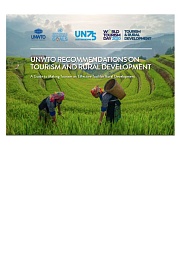
2020 marks the ‘Year of Tourism and Rural Development’, a theme shared with this year’s World Tourism Day. The sustainability of tourism in rural areas will only be successful if a comprehensive, inclusive planning strategy is adopted and implemented based on a multi-action and multi-stakeholder participatory approach.
The UNWTO Recommendations on Tourism and Rural Development aim to support governments at various levels, as well as the private sector and the international community developing tourism in rural territories in a way that contributes to inclusive, sustainable and resilient development.
The Roscongress Foundation presents the salient points of the publication accompanied by fragments of broadcasts of relevant panel discussions from the business programme of international events held by the Roscongress Foundation.
Tourism is one of the fastest growing and most resilient socio-economic sectors of our times. It accounts for 7% of global trade and has outpaced economic growth for the last decade. A leading employer, it generates millions of jobs directly and indirectly.
However, in many places, the benefits of tourism, including enhanced employment and gender opportunities, have been concentrated in urban and coastal areas, contributing to an unequal territorial distribution of wealth and economic opportunities.
Furthermore, pressure on the most visited locations comes with risks such as overcrowding, unsustainable demand for natural and cultural resources, and possible disruptions to social fabric and community life.
Video: https://roscongress.org/sessions/spief-2019-invest-sessiya/search/#00:57:21.663
Promoting tourism in rural areas spreads the benefits of the sector more widely across regions and populations, while at the same time mitigating the risks associated with the concentration of tourism in specific locations.
Tourism can be an effective means of providing socio-economic opportunities for rural communities. It can also help with increasing the attractiveness and vitality of rural areas, mitigating demographic challenges, reducing migration, and promoting a range of local resources and traditions while upholding the essence of rural life.
It can also celebrate a territory’s values, often the essence of the travel experience, in an active way so as to preserve both tangible and intangible heritage and complement the existing economic activities of these territories.
Video: https://roscongress.org/sessions/spief-2019-invest-sessiya/search/#00:57:21.663
In the context of the COVID-19 pandemic, the role of tourism in rural development is more relevant than ever.
Tourism in rural areas offers important opportunities for recovery as tourists look for less populated destinations and open-air experiences and activities. At the same time, communities in rural areas are, in general, much less prepared to deal with the direct and indirect impacts of crisis. It is therefore of critical importance to support them in facing the economic and social effects of the pandemic.
Moreover, the growing, intrinsic and unavoidable connection between urban and rural development has been accelerated by the current crisis. The shift in the world’s population towards urban areas creates new dynamics that offer opportunities for a fresh look and to re-think how to better enhance these urban-rural linkages.
Video: https://roscongress.org/sessions/rossiya-vybor-turista-chego-ne-khvataet/search/#01:36:35.840
The UNWTO Recommendations on Tourism and Rural Development aim to support governments at various levels, as well as the private sector and the international community in developing tourism in rural territories in a way that contributes to inclusive, sustainable and resilient development.
Such development will ensure the fair distribution of tourism’s benefits, enhance job creation, protect natural resources and cultural heritage, promote social inclusion and empower local communities and traditionally disadvantaged groups, particularly women, youth and Indigenous peoples. Inclusive tourism will also contribute to making rural territories more accessible for both locals and visitors of different generations and different access needs, thus providing a better quality of life for all.
2020 also marks 75 years of the United Nations (UN). Harnessing the power of tourism to drive rural development will enhance the sector’s contribution to achieving the Sustainable Development Goals (SDGs) and the implementation of the Global Code of Ethics for Tourism. As the world faces one of the most challenging crises of all times, there is a collective opportunity to renew our efforts and develop innovate approaches that will foster tourism’s potential for development, including its unique ability to drive development for rural communities as one of the socio-economic activities engaging across and throughout communities and leaving no one behind.
For more information, please see the StayHomeEconomy special section of the Roscongress information and analytical system, Economic Inequality, and Gender parity, and Culture, and Tourism.