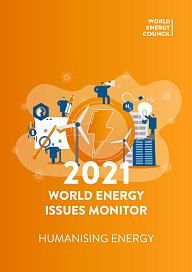
The World Energy Council has published its annual World Energy Issues Monitor. Now in its 12th year, the report provides a forward-looking assessment of the global energy agenda based on the views of more than 2,500 energy leaders from 108 countries.
This years World Energy Issues Monitor is not like any is not like any other. Set against the backdrop of crisis caused by the continuing COVID-19 pandemic, the 2021 survey has reframed and reset the energy transition agenda.
The Roscongress Foundation presents the salient points of the publication accompanied by fragments of broadcasts of relevant panel discussions from the business programme of international events held by the Roscongress Foundation.
There has been major realignment in energy leaders priorities.
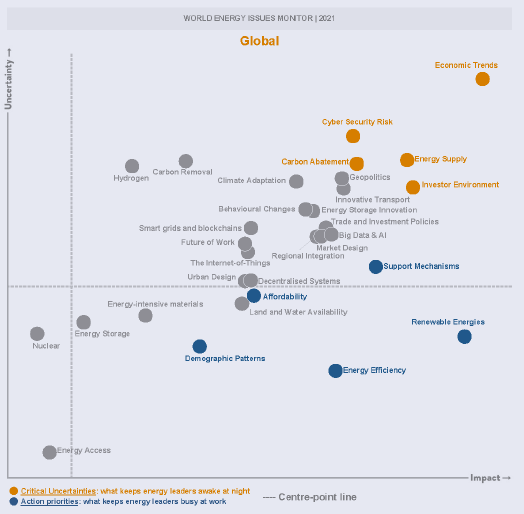
Energy leaders perceptions of areas of risk, opportunity, and priorities for action have radically changed over the last 12 months. While economic turbulence stemming from the ongoing reverberations of COVID-19 is the biggest area of uncertainty, with uncertainty around economic trends increasing by a third over the previous year, there is also a growing focus on the social agenda associated with a faster paced energy transition.
Video: https://roscongress.org/sessions/tsifrovaya-realnost-atomnoy-otrasli-/search/#00:43:33.759
Energy affordability has rapidly risen up in the industrys priority list.
There is an increased awareness of the societal and human impact of both recovery and the wider energy transition. The issue of energy affordability has rapidly risen up the industrys priority list, with its impact and uncertainty perceived 20% larger than a year ago. Energy affordability affects society across all geographies ranging from city dwellers in developed countries to the rural poor in developing ones.
The emergence of a new generation of digital energy services and energy entrepreneurs.
Increasingly agile, disruptive technologies have taken advantage of the social upheaval to gain market share at the expense of supply-centric energy solutions. There is a growing focus on customer-centric demand-driven solutions and fast changing patterns of global and local demand.
We also suggest that you read other materials posted in the special sections of the Roscongress Foundation Information and Analytical System: Power generation, Renewable Energy sources, COVID-19, Sustainable Development and Digitalization about energy sources and sustainable development.