Man in a new reality.
The COVID-19 pandemic has shown that the quality of human capital is not simply a factor in developing countries’ economies, but is becoming a fundamental element of the viability of socio-economic systems as a whole. The speed of response to new threats and the degree of readiness to adapt to new conditions is largely correlated with the level of development of human capital.
Practical awareness of this fact has led to the emergence of many initiatives to develop and increase human potential and capital on the part of the state, as well as from business, from non-profit organizations, and from the population.
Competition for human capital leads to the intensification of the development of a convenient and comfortable urban environment and to the strengthening of measures within the framework of CSR to create a favourable working environment and opportunities for self-realization of employees outside of professional activities. Such initiatives are particularly relevant for the creative economy, including science and education.
National development goals.
The most painful effects of the COVID-19 pandemic were either managed at an early stage or overcome through the help of systematic support measures for the population and individual sectors of the economy. The current challenges are to achieve pre-crisis performance of the economy and put it on a trajectory of further sustainable development.
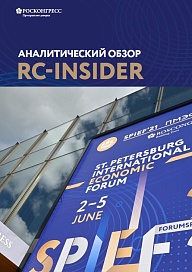
As the history of overcoming crises shows, future growth points include investment in infrastructure, territorial development, technological leapfrogging, and building the human potential of economic growth. In this regard, at SPIEF 2021, projects for the development of transport infrastructure were actively discussed, with the allocation of the eastern direction as a special priority; measures to ensure macroeconomic stability; initiatives to develop the social sector of the economy, and concerning health, based on lessons from COVID-19; youth involvement in entrepreneurship; and regional aspects of economic growth.
Joining efforts for development.
The COVID-19 pandemic has shown how fragile international ties really are. Social inequality in the world has led to a significant decrease. Social disparities worldwide have led to a considerable reduction in the effectiveness of the fight against coronavirus, which has been a major driver in maintaining all sorts of barriers between countries for so long. For example, countries that produce half of all vaccines account for only 16% of the world’s population. As a result, the proportion of the vaccinated population of the planet is around 10%, which is obviously not enough for the formation of herd immunity.
This situation has pushed the issue of public health to the forefront of the international cooperation debate, pushing the climate agenda to the back burner. Both topics are critical, and both cannot be addressed without an international consensus and a system of practice-oriented initiatives involving all countries in the world.
SPIEF 2021 participants have no doubt that the post-pandemic world will be built around digital technologies. However, many issues, including the digital sovereignty of countries and the performance of the global digital information network, cannot be solved by individual countries and need international cooperation.
Technology that broadens the horizon.
Technology, in many ways, became the backbone of many processes during the period of mass lockdowns. People worked, studied, bought, and communicated online. All kinds of digital platforms have replaced many traditional offline activities and procedures. Digital all sorts of platforms replaced many traditional offline activities and procedures. And even when all restrictions are lifted, their importance will not diminish to pre-pandemic levels. In such conditions, additional measures are needed to protect employees on platforms, prevent monopolization, and to create a legal and regulatory framework for the digital services that have gained such strong momentum over the past year.
Simultaneously with the massive introduction of existing technologies, it is necessary to discuss the creation of new breakthrough technologies, the full significance, and importance of which will probably only unfold in the 22nd century. Among such technologies, neuroengineering and neurobiology in general, as well as quantum technologies, are of particular importance.
Small and medium businesses.
SMEs have, more than any other type of business, felt the full brunt of the pandemic. And now, the risks for SMEs have not dramatically decreased. It is more difficult for SMEs to overcome the barriers of digital inequality, and it is on their shoulders that most of the challenges outlined above will fall. Many discussions that took place at the SPIEF 2021 sites were devoted to all kinds of solutions to such issues. IT training programmes, out-of-the-box solutions, getting out of the shadow sector, and the creation of an institute of digital reputation, are just some of the complete list of measures suggested to support SMEs at SPIEF 2021.
For more information visit 2021.forumspb.com.