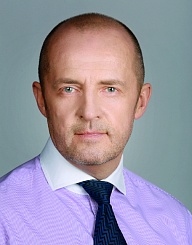
«With a planning horizon of only three to five years, no serious change is possible. That requires setting goals for decades ahead. It also requires action», says Mars President Valery Shchapov.
Mars is a company that four generations of consumers around the world know well. We can be proud of that, but for us, its also a reason to consider our responsibility to future generations. Never before has this industry been faced with so much responsibility. If we want to help achieve the UN Sustainable Development Goals, significant change is unavoidable. The time has come to rethink our role in a changing world.
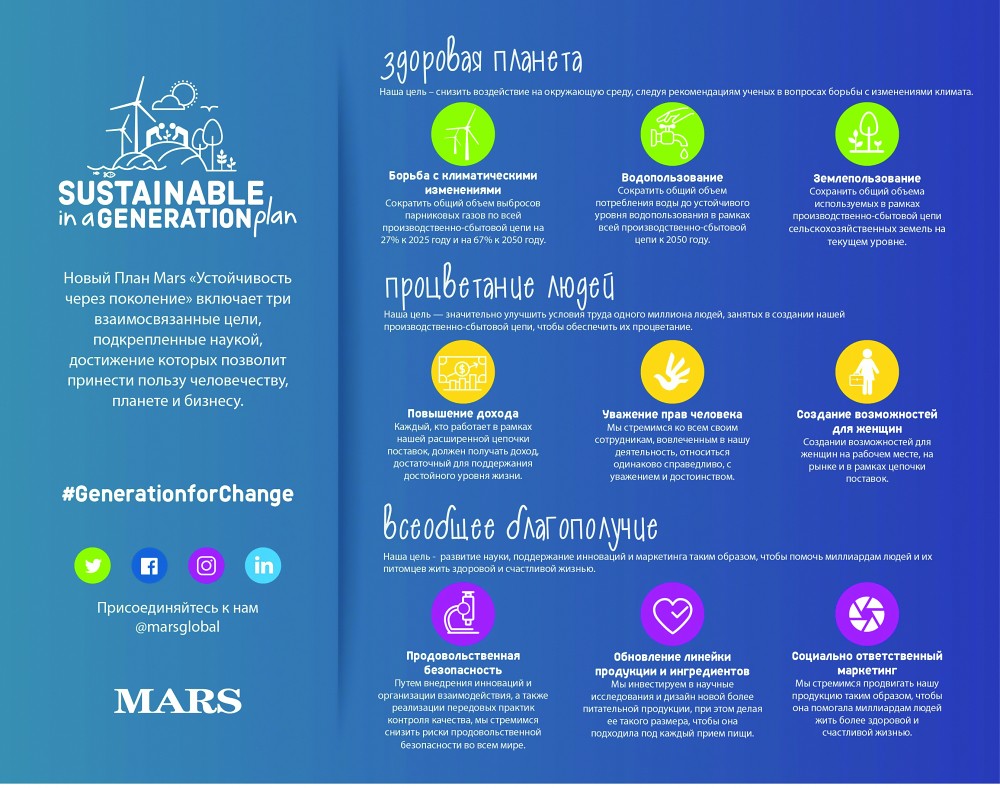
In responding to global challenges, we have set ourselves three chief goals: Healthy Planet, Thriving People, and Nourishing Wellbeing. Together, they form the foundation of our new global plan, Sustainable in a Generation. Mars, Inc. will spend 1 billion dollars on that plan around the world over the next three years. This is not a onetime initiative. Its an expansion of our ongoing sustainable development goals. Mars has been operating along these lines for the past 10 years.
Our objective is to be an example to other companies of how to take a wider view of the situation, not just in terms of the companys direct impact, but also at all points along the supply chain. No country, agglomeration, or company can respond to these global challenges on its own. What exactly are these goals all about?
Healthy Planet is a set of longterm steps aimed at reducing our impact on the natural environment. For instance, in 2017, Mars opened its own wind farm in Moy, in the Scottish Highlands. It generates enough renewable energy to power all of the companys operations in the United Kingdom. All M&M production in the US has already transitioned completely to wind power sources. Every similar step we take moves us closer to one of our key goals: reducing greenhouse gas emissions in the Mars value chain by 67% by the year 2050 (compared with the 2015 figure). The companys operations must pose absolutely no threat to the atmosphere by 2040 (zero greenhouse gas emissions). Similar principles with respect to land and water resources are also very important to us.
Sometimes it might seem that were talking about our priorities abroad, but not in Russia. This is not the case. For example, by 2015, all of our factories in Russia had completed the transition to 100% recycling of waste products, becoming the pioneers among Mars factories. At present, there are 10 Mars pet feed, confectionery, chewing gum, and condiment factories operating in Russia.
Thriving People, for Mars, means working with millions of farmers in all of our production chains. They dont interact directly with us, but we are the end user of the crops they harvest. Clearly, if we dont tackle the problem of low farmer incomes today, then tomorrow their children will be left without jobs, and the rest of us will have no cocoa beans, rice, or mint. So at Mars weve begun searching for solutions, including working with non-profits and professional associations, to help farms operate more efficiently. Another area of activity concentrates on research by university scientists who are helping us strike a balance between suppliers and purchasers business interests. And along with other big firms, we are teaching smaller cooperatives and family farms how to develop sustainable production.
At Mars, we are striving to help our scientists and nutritionists make changes and improve products as quickly as possible, so that people and pets can enjoy high-quality, balanced food. Today there are a number of regions on the planet where people need to improve and expand their diets. For that to happen, we need technologies that result in bigger harvests at current levels of energy expenditure, without harming the environment. And then in places where consumers have unlimited resources to spend on food, the problem of a balanced diet comes to the foreground. That means we need to devote more attention to information about nutritional value on product packaging, and work on portion sizes.
Concern about the wellbeing of future generations can also take the form of banning the advertising of certain products targeted at children under 12. It also plays a role in how we use our world-famous brands to draw attention to important social issues. These include social inclusion for people with Down syndrome (as in Pedigrees project, Sunshine for My Best Friend), or for children with facial deformities (Orbits Two Smiles in a Pack campaign).
Our goal is to make life better for future generations, and we can only do that by relying on consistent, trusting interaction with young people. They are the ones who will be shaping our tomorrows. So its a great honour for us to support the work of the volunteers at the St. Petersburg International Economic Forum. Over 1,000 young people will be participating, some of them as part of a joint Roscongress FoundationMars initiative. Theyll be able to apply the knowledge they gain here immediately, and SPIEF will prove to be one of the most important and meaningful events of their lives so far.
It wont be long before these young people are asked to find answers to all these various challenges, and our goal today is to provide them with the best expertise and arm them with the best experience, drawn from all the generations who have already lived and worked with Mars.
Source: SPIEF-2018 Official Magazine