Invest in Russia — invest in Russian regions!
All analytics

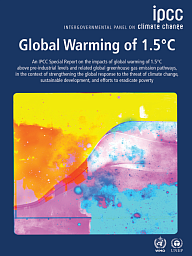
IPCC Special Report: Global Warming of 1.5°C

Research
27 September 2019

The report by the Intergovernmental Panel on Climate Change (IPCC), approved in Incheon, South Korea, and published in October 2018, includes over 6,000 scientific references, and was prepared by 91 authors from 40 countries.

The Special Report on 1.5°C assesses three main themes:

  1. what would be required to limit warming to 1.5°C (mitigation pathways);
  2. the impacts of 1.5°C of warming, compared to 2°C and higher;
  3. strengthening the global response to climate change; mitigation and adaptation options.

The key finding of the report is that meeting a 1.5°C target is possible but would require «deep emissions reductions» and «rapid, far-reaching and unprecedented changes in all aspects of society.» Furthermore, the report finds that «limiting global warming to 1.5°C compared with 2°C would reduce challenging impacts on ecosystems, human health and well-being» and that a 2°C temperature increase would exacerbate extreme weather, rising sea levels and diminishing Arctic sea ice, coral bleaching, and loss of ecosystems, among other impacts.
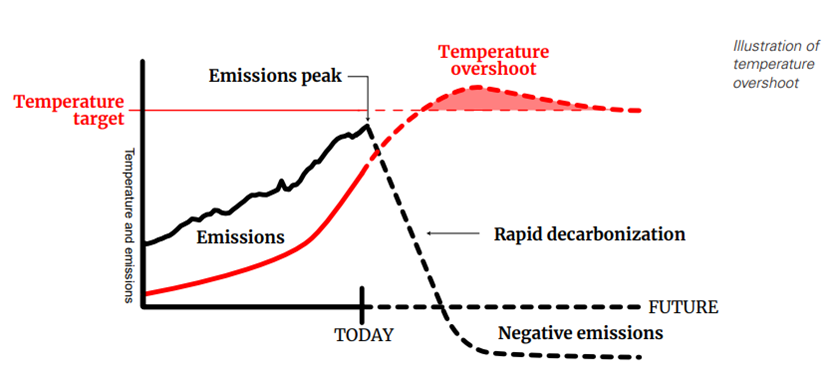
The report also has modelling that shows that, for global warming to be limited to 1.5°C, «global net human-caused emissions of carbon dioxide (CO2) would need to fall by about 45 percent from 2010 levels by 2030, reaching ’net zero’ around 2050.» The reduction of emissions by 2030 and its associated changes and challenges, including rapid decarbonisation, was a key focus on much of the reporting. Even assuming full implementation of conditional and unconditional Nationally Determined Contributions submitted by nations in the Paris Agreement, net emissions would increase compared to 2010, leading to a warming of about 3°C by 2100, and more afterwards. In contrast, limiting warming below or close to 1.5°C would require to decrease net emissions by around 45% by 2030. Even just for limiting global warming to below 2°C, CO2 emissions should decline by 25% by 2030 and by 100% by 2075.

Pathways (i.e. scenarios and portfolios of mitigation options) that would allow such reduction by 2050 permit only about 8% of global electricity to be generated by gas and 0-2% by coal (to be offset by carbon dioxide capture and storage). In these pathways, renewables are projected to supply 70-85% of electricity in 2050 and the share of nuclear energy is modelled to increase. They also assume that other measures are simultaneously taken: e.g. non-CO2 emissions (such as methane, black carbon, nitrous oxide) are to be similarly reduced, energy demand is unchanged, reduced by 30% or offset by an unprecedented scale of carbon dioxide removal methods yet to be developed.
Anlytics on the topic

All analytics
Analytical digest
20 January 2020
Green economy and international trade: On the path to sustainable development

The Report was prepared for the Russia House at the World Economic Forum Annual Meeting in Davos in January 2020. Based on the analysis of foreign sources, the key issues on the agenda of the Meeting are revealed: approaches to overcoming environmental problems and ways of sustainable business transformation.


Research
24 September 2020
China in the Arctic. Policies, Strategies, and Opportunities for Alaska

Specialists of the University of Alaska Fairbanks have prepared a report elaborating politics and position of China in the Arctic, specifically, bilateral relations between Alaska and China.

Analytical digest
24 March 2020
ROSCONGRESS INSIDER. Special issue on the outcomes of the Russia–Africa Economic Forum

In this analytical digest, the Roscongress Foundation summarizes the outcomes of the first Russia—Africa Economic Forum which took place on 23–24 October, 2019 in Sochi.

Expert opinion
29 May 2018
“Smoke-free products are the future”
Ashok Rammohan, President of Philip Morris International in Russia and Belarus, tells about innovations that can significantly reduce the harm caused by cigarettes.