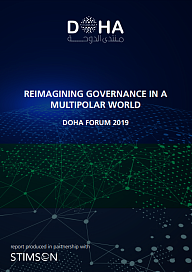
Under the theme of reimagining governance in a multipolar world the nineteenth edition of the Doha Forum, held on 14-15 December 2019, aimed to contribute to policy dialogue on the future of global governance.
To reimagine and better prepare our system of governance to keep pace with fast changing trends, the authors of the report suggest that we should comprehend its many facets in todays multipolar world. Among its most important dimensions are:
- Global and Regional Governance Dimensions (the crisis of multilateralism; challenges to the international legal order; and the growing reach of regional organizations);
- Population Movements and Social Dimensions (refugees and migration; and human capital and global inequality);
- Gender and Youth Dimensions (assessing womens progress; «youth peace and security» and inclusive multilateralism; and inclusive governance in a multipolar world);
- Political and Security Dimensions (diffusion of power globally; new interpretations of sovereignty and identity; changing nature of conflict; and cyber and other emerging technologies);
- Economic and Technological Dimensions (cross-border economic shocks; illicit financial flows; and technology, cybersecurity, and blockchain in the hyperconnected global economy);
- Environmental Dimensions (the climate crisis intensifies; and the looming threat of water scarcity).
Learning from the hard-fought successes and failures to address these dimensions of multipolar governance, the following ten principles, expanded upon in this report, aim to strengthen governance and collective action across borders:
- Resolve Conflicts Peacefully through Dialogue: Conflicts between two or more parties internationally should, first and foremost, be resolved through discussion and compromise. The lawful use of force should only be entertained when all peaceful measures have been exhausted.
- Ensure Inclusive, Open, and Fair Decision-Making: Decision-making at all levels of governance should be inclusive of all relevant stakeholders and reflect a common understanding of the universality of human dignity and equality.
- Uphold International Law: All states have an interest in upholding the international legal order and developing it further in order to resolve differences and to address the global challenges of our time.
- Respect the Sovereign Equality of All States: In a multipolar world, emerging centers of power must respect the sovereign rights of smaller countries and work together with them in a spirit of solidarity and cooperation.
- Strengthen International Institutions: States should invest in the capabilities, accountability, and overall effectiveness of international institutions to deliver global public goods, in partnership with global civil society and the business community.
- Advance Human Rights and a Global Civic Ethic: States and their partners in global civil society and the business community should work to promote basic human rights and develop a more universal sense of ownership of these rights, including by forging a common global civic ethic.
- Safeguard Inter-Generational Rights and Responsibilities: The highest moral and ethical considerations should factor into political, economic, social, environmental, and other kinds of decision-making that may impact the health, security, and livelihoods of future generations.
- Embrace Diversity and Tolerate Dissent: States should work to foster a culture of respect for cultural, ethnic, religious, and regional diversity and strive for the broadest possible representativeness within global governance institutions, while also affirming other core international values.
- Invest in Human Capital: In order to truly boost people-centered and humane global governance, both the public and private sectors need to invest significantly in human capital.
- Conserve and Regenerate Natural Resources: Through multilateral and multi-stakeholder cooperation that engages states, international organizations, global civil society, and the business community, humanity needs to redouble its efforts to manage natural resources responsibly and move to a sustainable economic model.